

Charlotte, NC | Charleston, SC | Columbia, SC | Greensboro, High Point & Winston Salem, NC | Raleigh, Durham & Chapel Hill, NC | Greenville & Spartanburg, SC | Wilmington, NC |
DESIGNWORKS 2025
Flooring Installation – Honorable Mention
Wake Forest University – KinderCare at WFU
Winston Salem, NC

CJMW Architecture + Interior Design
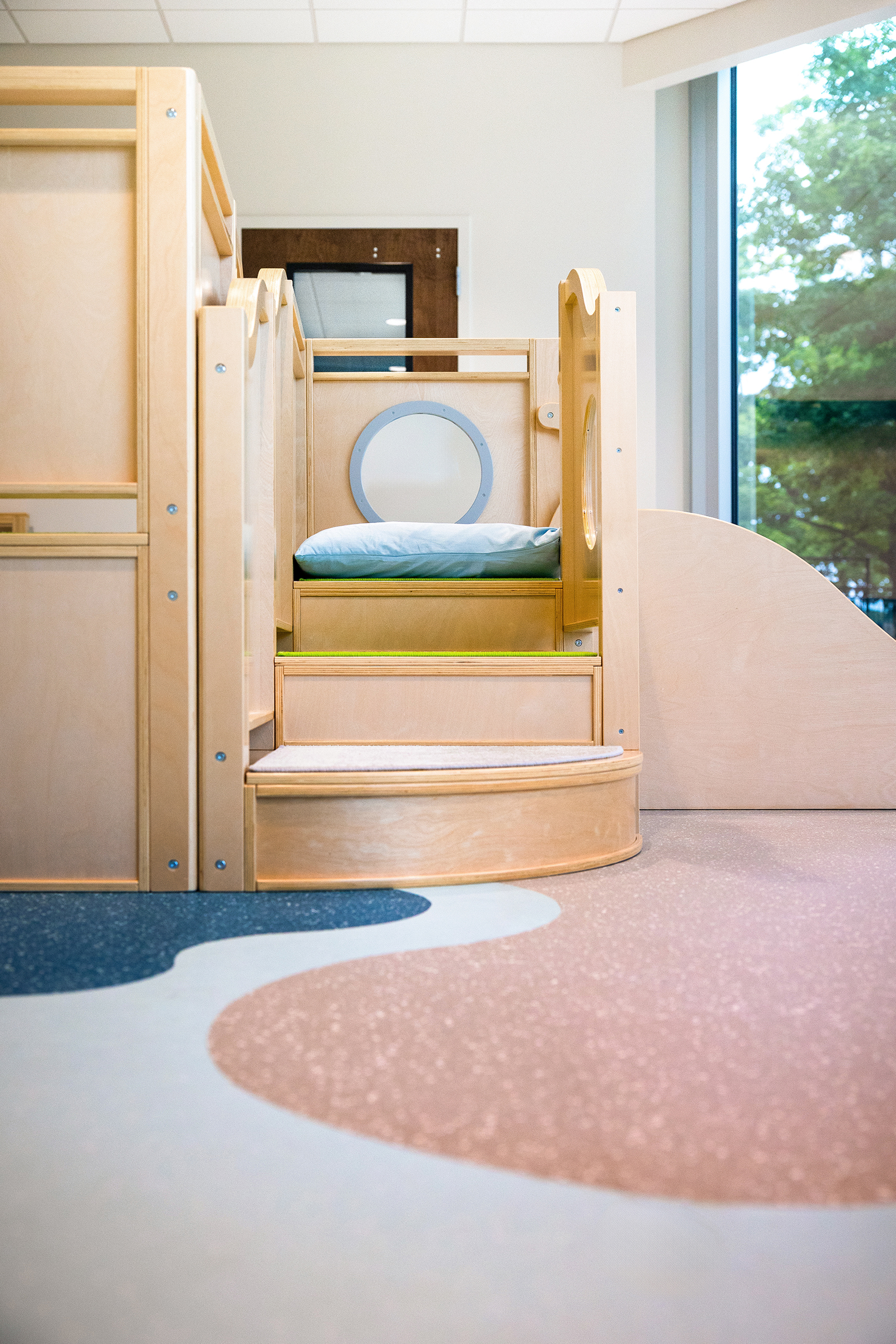
The flooring design for the Wake Forest University + KinderCare Early Childhood Center reflects an elevated, research-informed approach to early childhood environments—one that prioritizes sensory development, intuitive navigation, emotional regulation, and cognitive engagement. The design team, working in close collaboration with KinderCare and Wake Forest University, developed a comprehensive flooring strategy that meets code requirements for durability, safety, and cleanability, while creating a rich sensory and developmental experience for children ages six weeks to five years.
Rather than defaulting to standard brightly colored materials, the team curated a palette and layout grounded in developmental theory, color psychology, and biophilic design research. Flooring was used not only as a finish but as a teaching tool, a narrative device, and a foundation for learning.
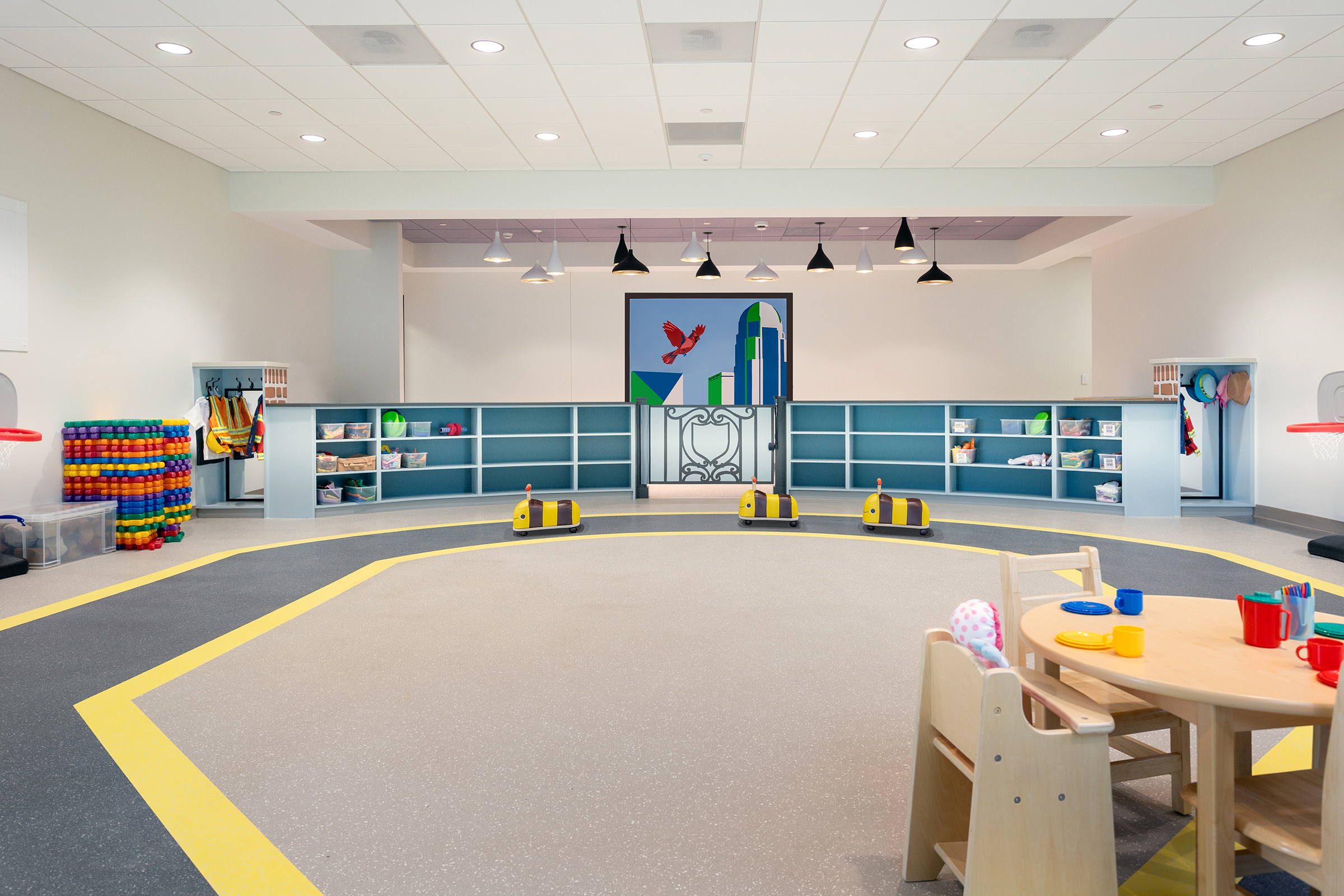
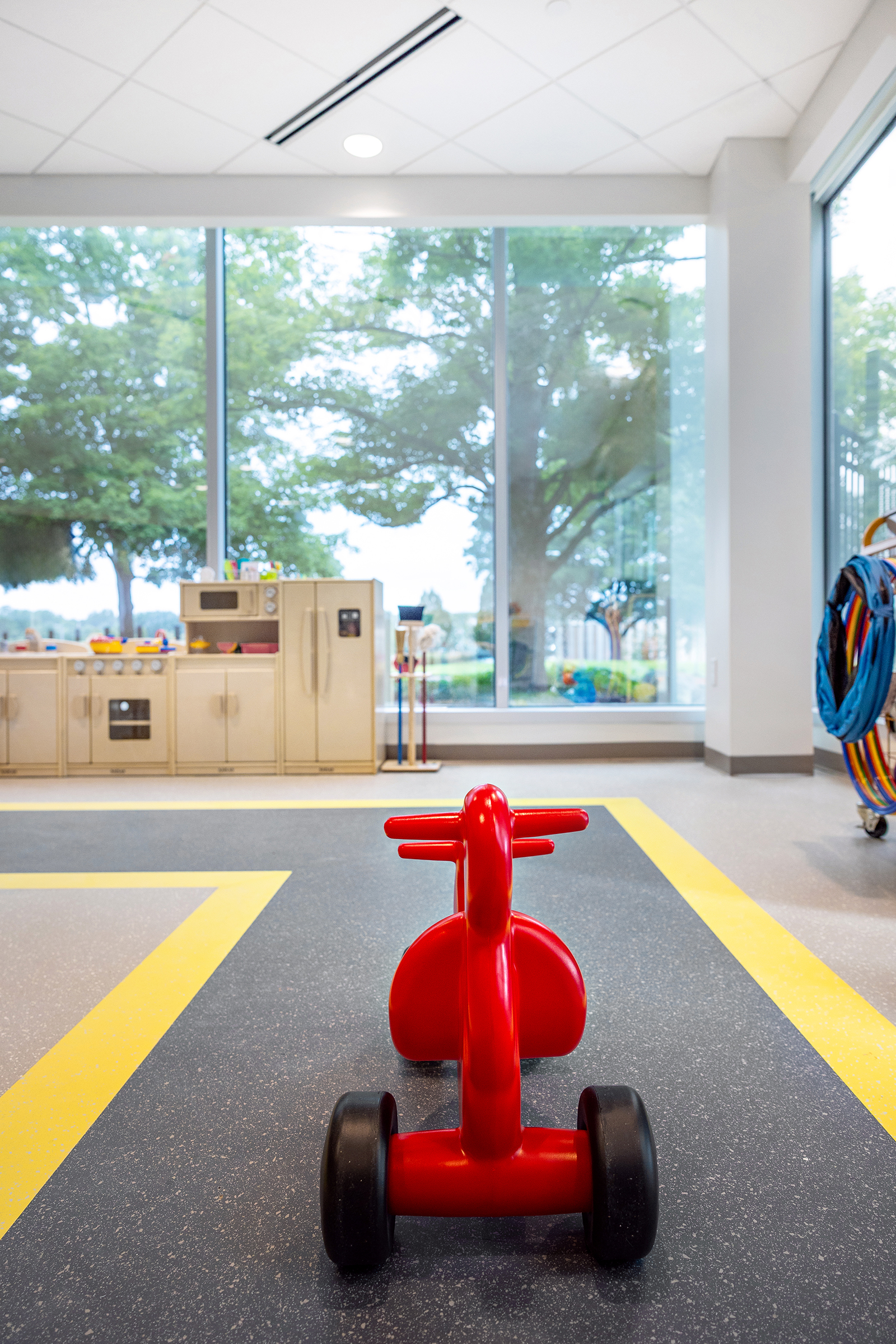
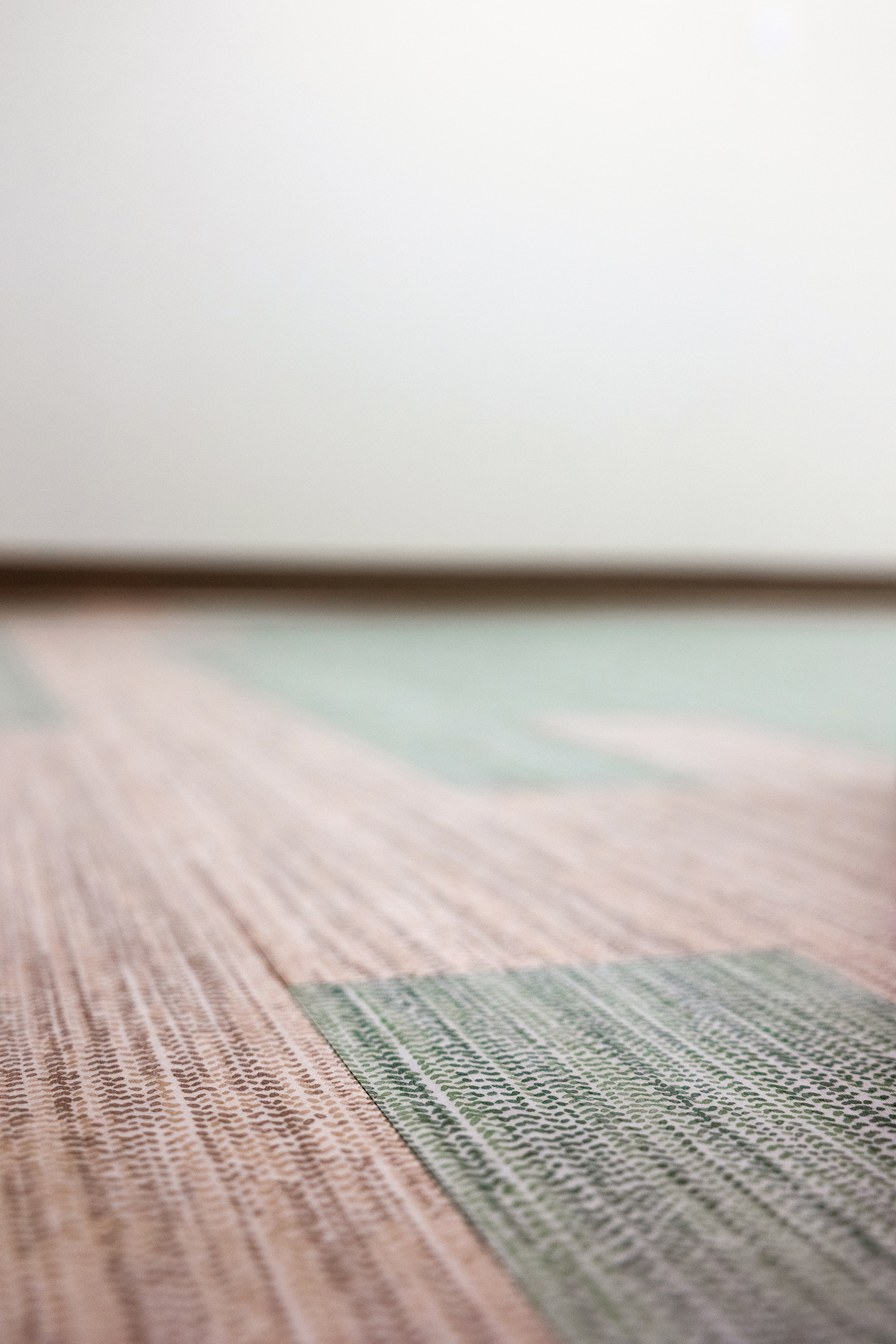
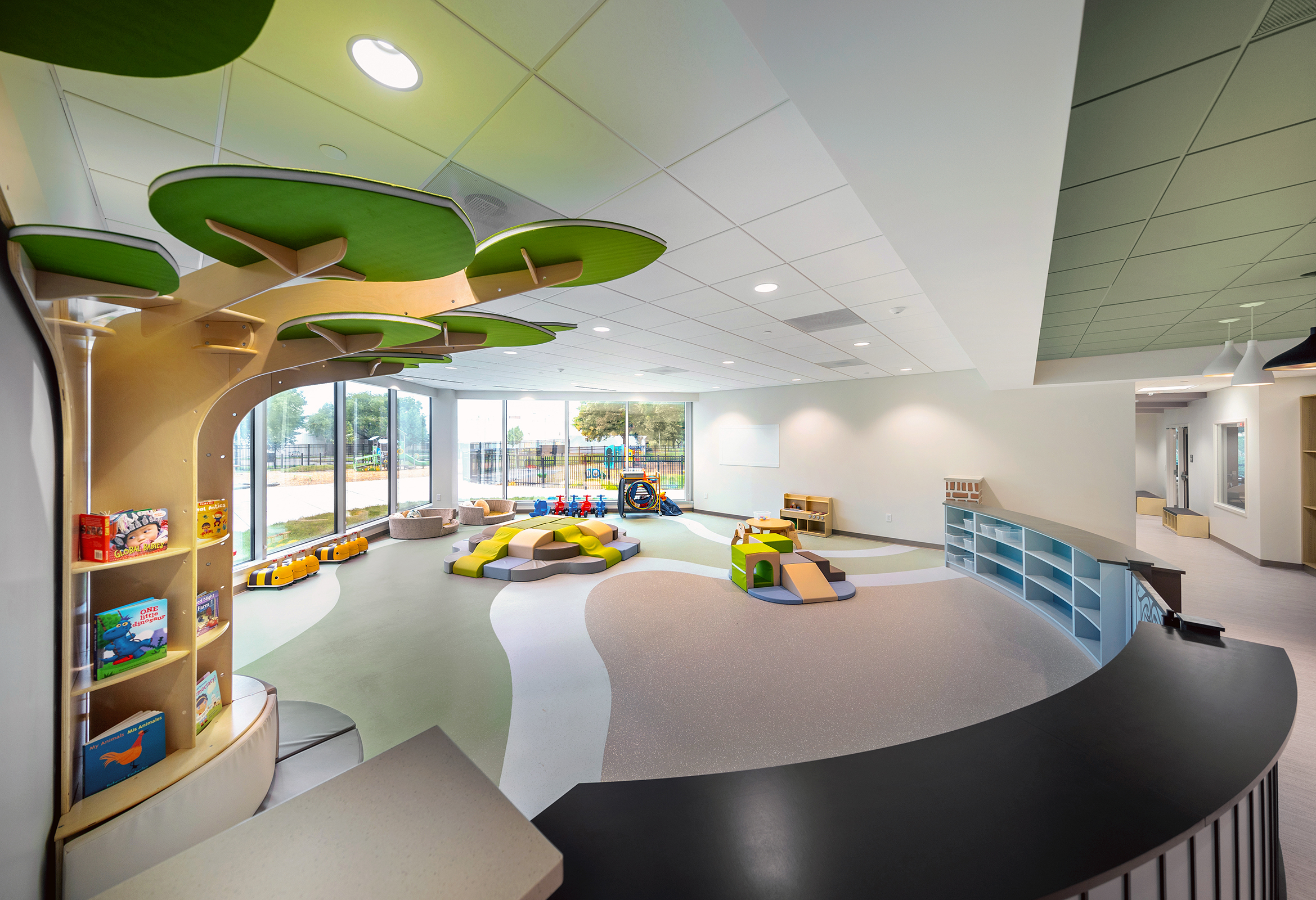
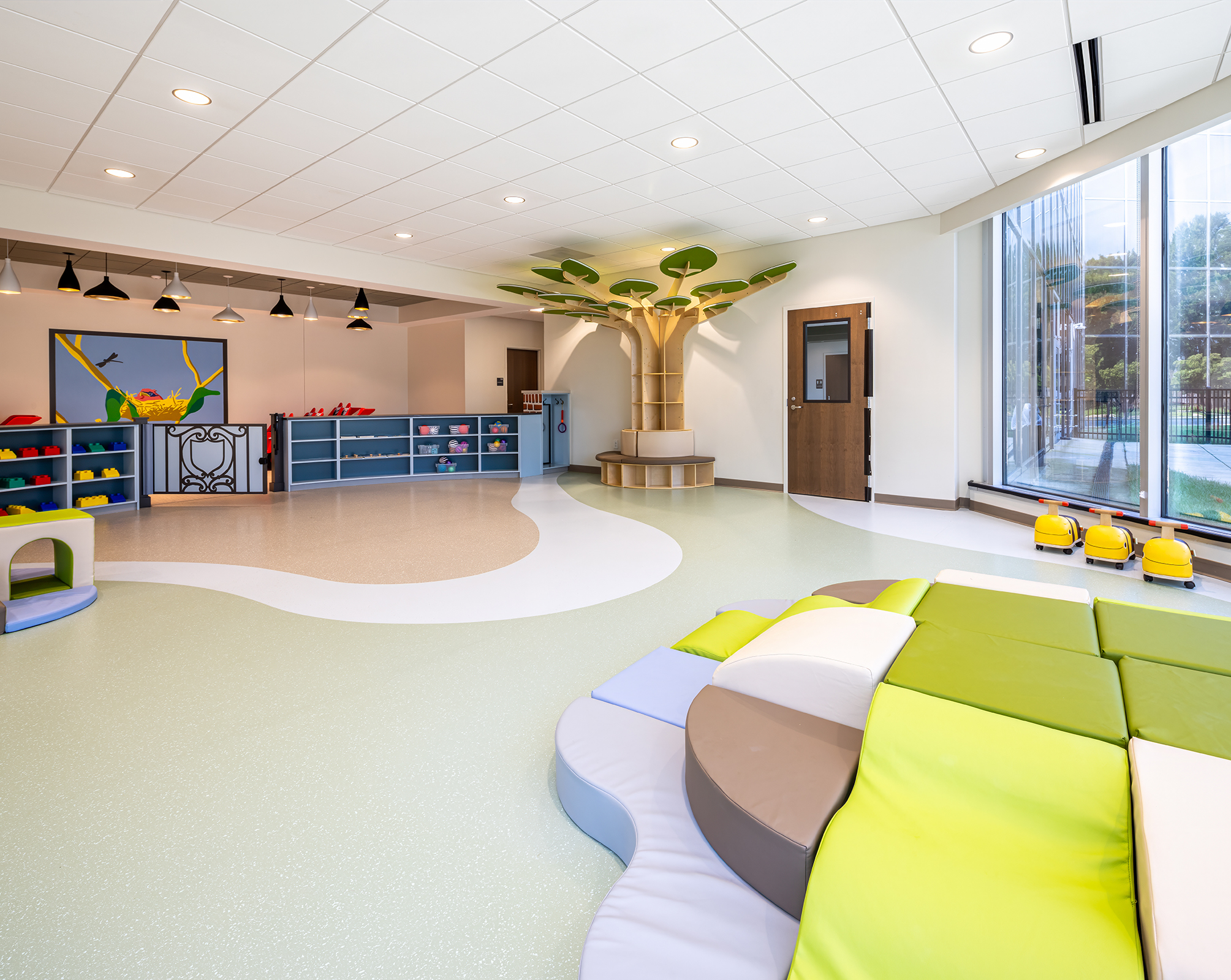
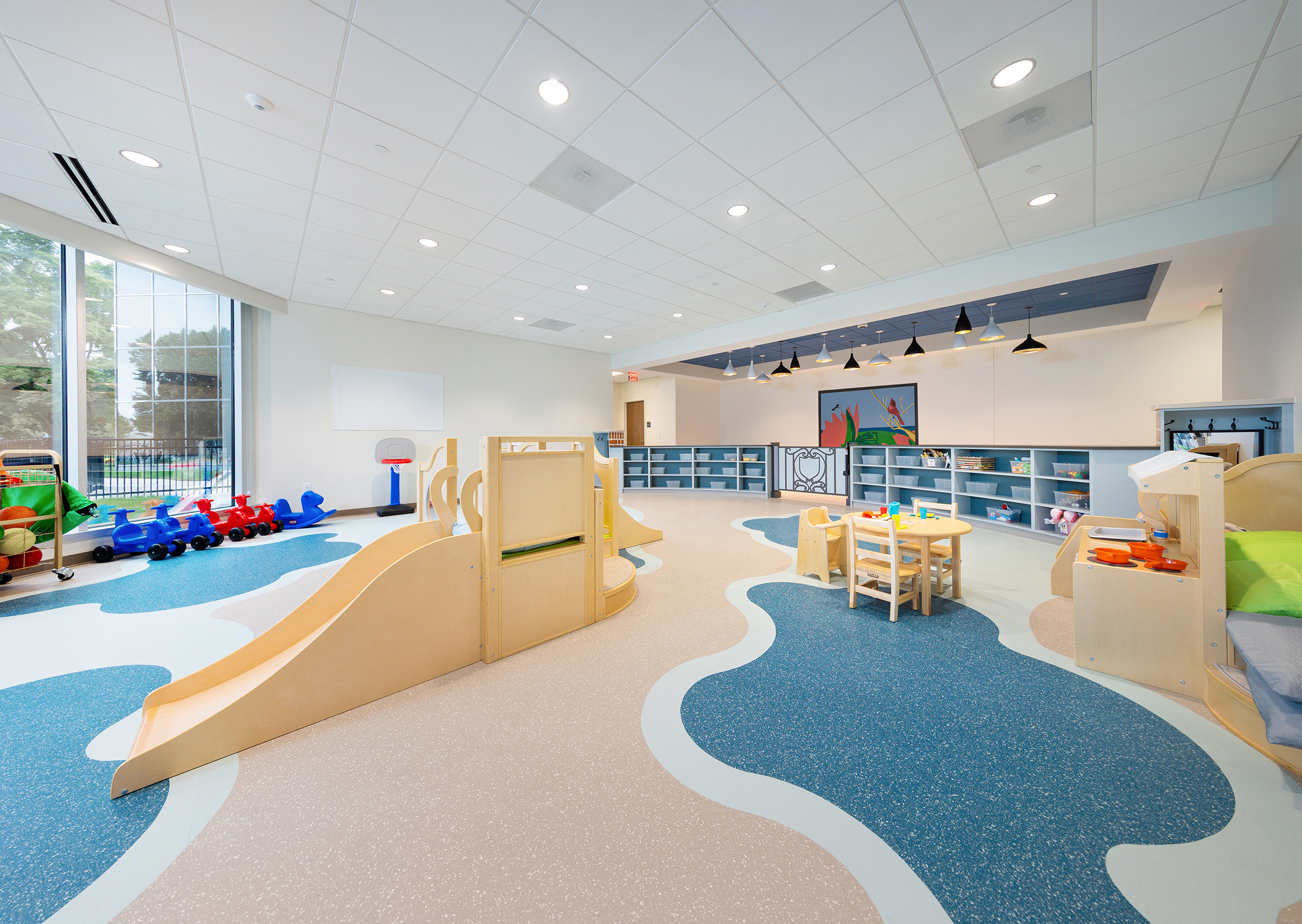
A combination of antimicrobial luxury vinyl tile (LVT) and hand-cut PVC-free solid rubber was used across the facility. Each indoor play zone features a custom inlay design that reflects the three developmental stages guiding the center’s pedagogical and spatial framework:
• Nurture (Infants): A soft, meandering stream motif in calming tones reinforces comfort, grounding, and early sensory awareness.
• Emerge (Toddlers): Playful puddles and stepping stones invite movement, balance, and spatial exploration—critical for gross motor development.
• Activate (Pre-K): A bold, track-like road suggests direction, energy, and purposeful engagement, mirroring a child’s emerging autonomy.
Inlays were not pre-fabricated but created on site by hand, the design team worked closely with the installers, sketching cut lines in place and coordinating every adjustment to ensure accuracy and alignment. This method ensured the organic curves retained a natural softness appropriate for young children and maintained alignment with other architectural elements. Every seam and weld was evaluated through physical mockups to determine the most hygienic and visually cohesive solution, ultimately landing on a chemical weld that met both aesthetic and performance goals.
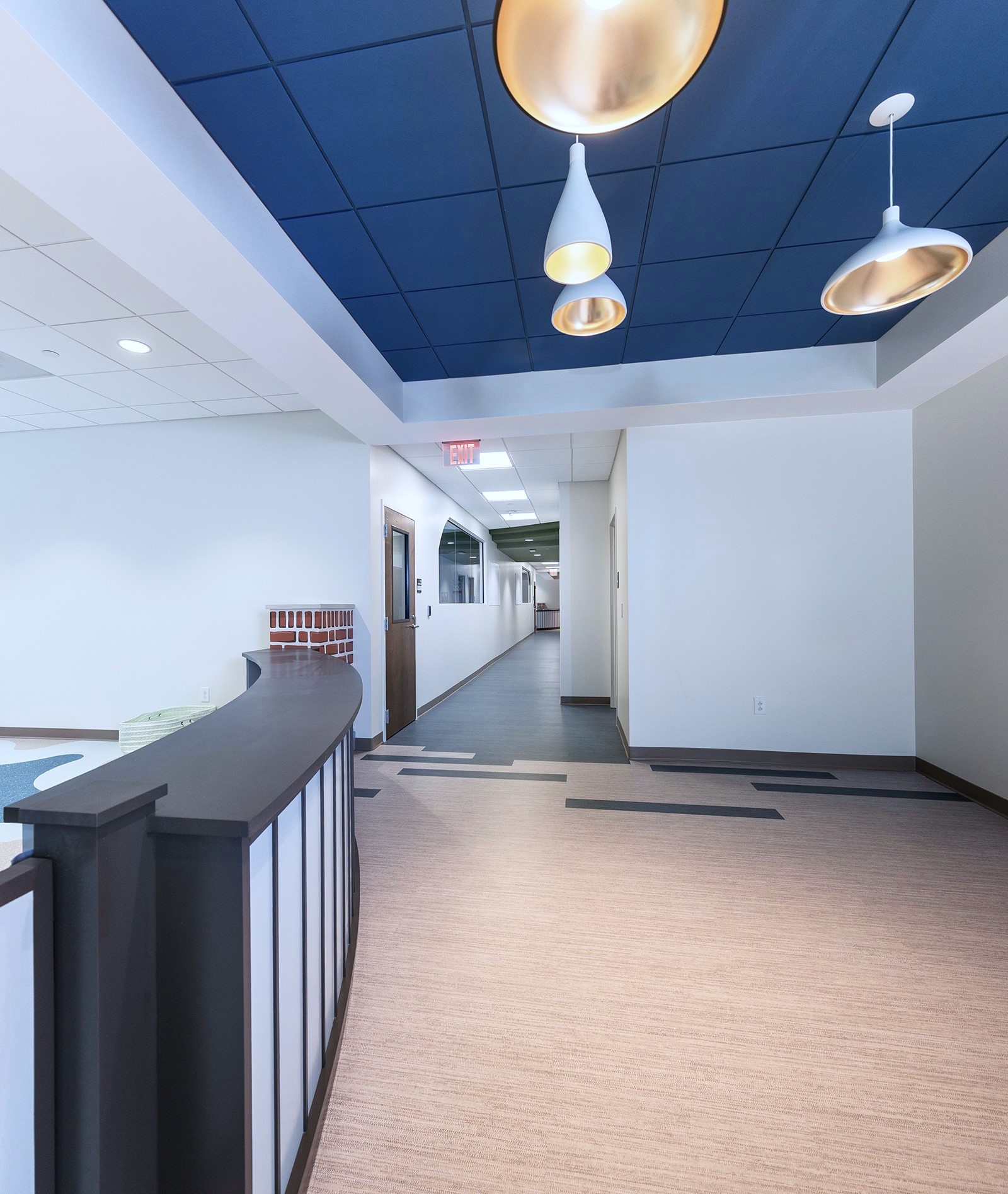
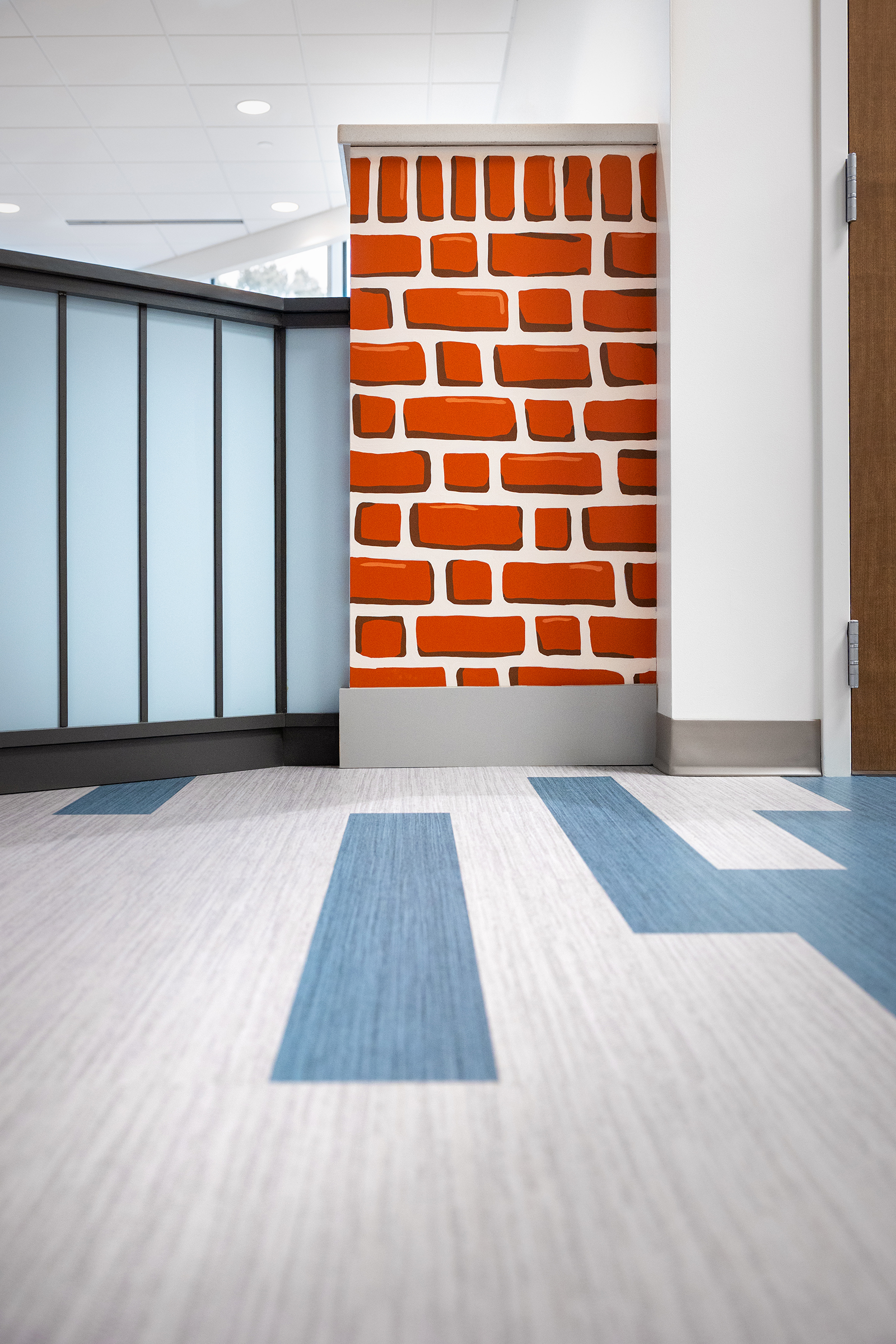
In the central corridor—serving as the spine of the center—flooring also plays a critical role in wayfinding. Subtle shifts in color and texture signal progression through the developmental journey, helping children and caregivers intuitively navigate from the calm of infant rooms near the entry to the bright, energetic Pre-K rooms at the far end. These transitions support visual memory and provide gentle spatial cues that reinforce predictability and belonging—two pillars of early childhood learning.
In all areas, flooring was selected for its softness underfoot, cleanability, and acoustic performance. The neutral tones and matte finishes create a warm, home-like atmosphere, while still supporting rigorous institutional standards for health, safety, and maintenance. Durable LVT complements the more detailed play area flooring, ensuring a consistent, high-performance surface throughout.
Ultimately, flooring in this project was more than a surface—it was an experiential layer that connects story, function, and development. From storytelling cues to sensory regulation and spatial rhythm, the flooring design supports the whole child: physically, emotionally, and cognitively.