

Charlotte, NC | Charleston, SC | Columbia, SC | Greensboro, High Point & Winston Salem, NC | Raleigh, Durham & Chapel Hill, NC | Greenville & Spartanburg, SC | Wilmington, NC |
DESIGNWORKS 2025
PreK-12 Education – Winner
Foust Elementary Gaming & Robotics Magnet School
Greensboro, NC
Gensler
“The function of education is to teach one to think intensively and to think critically. Intelligence plus character — that is the goal of true education.” – Martin Luther King Jr.
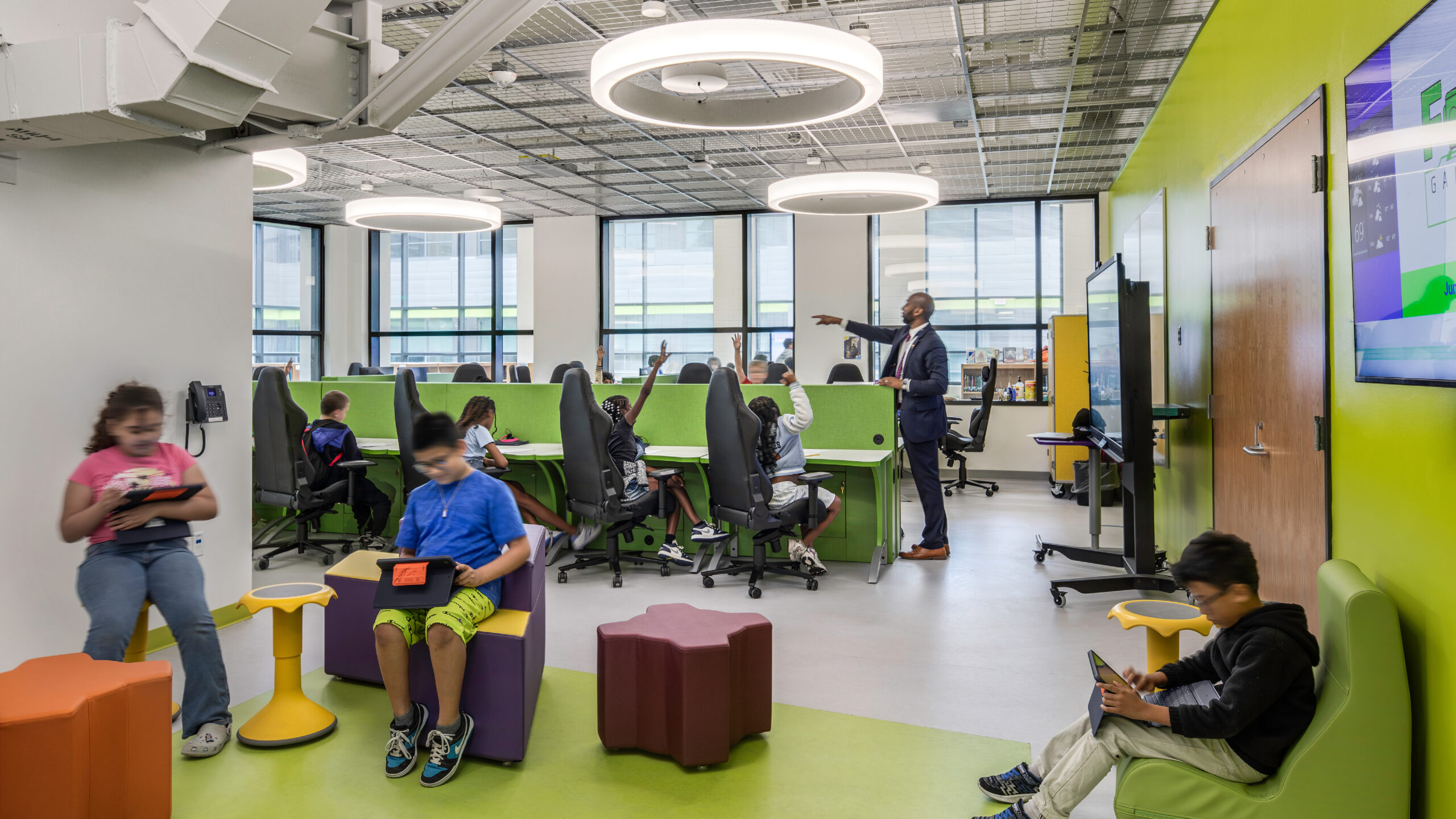
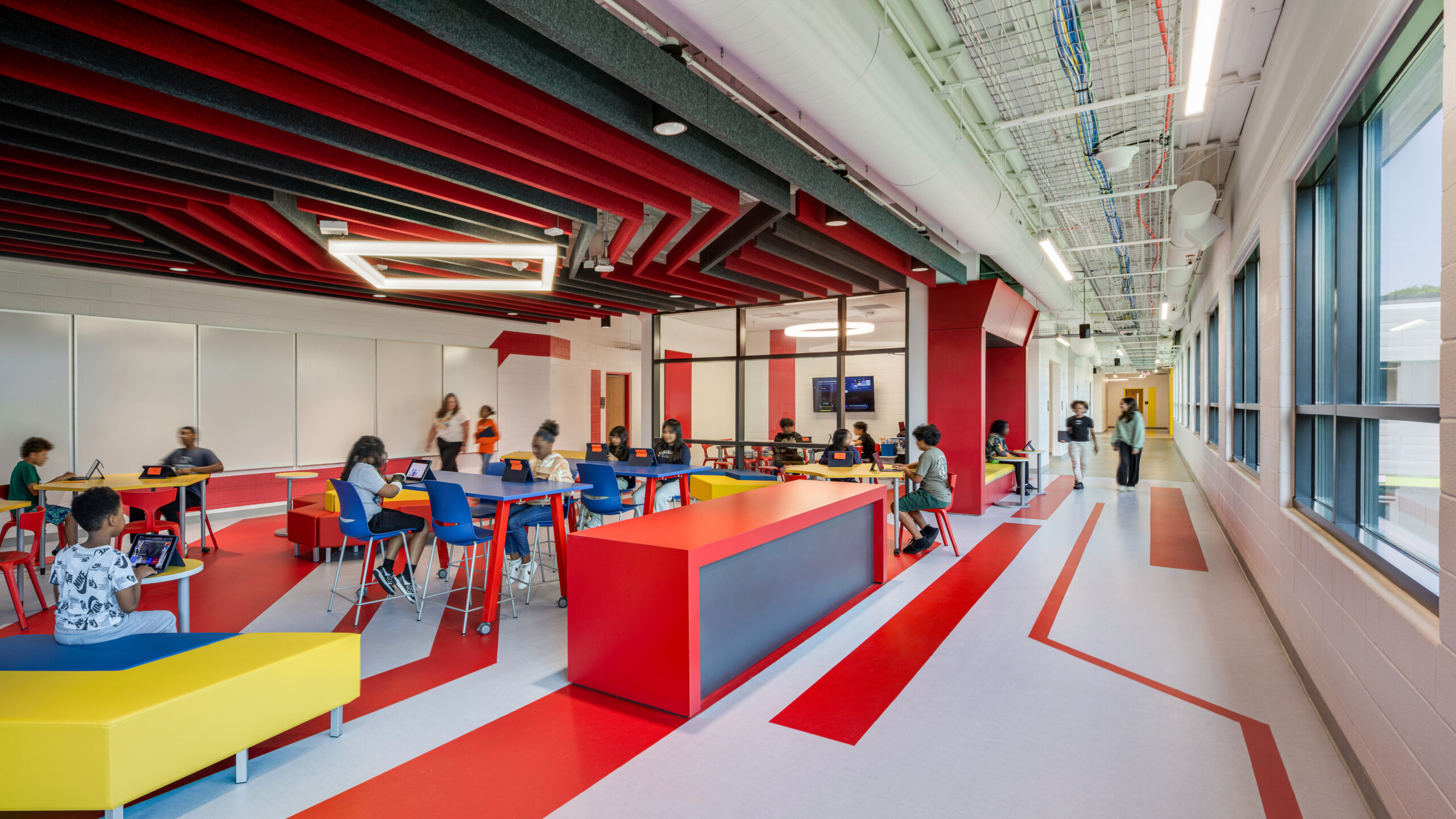
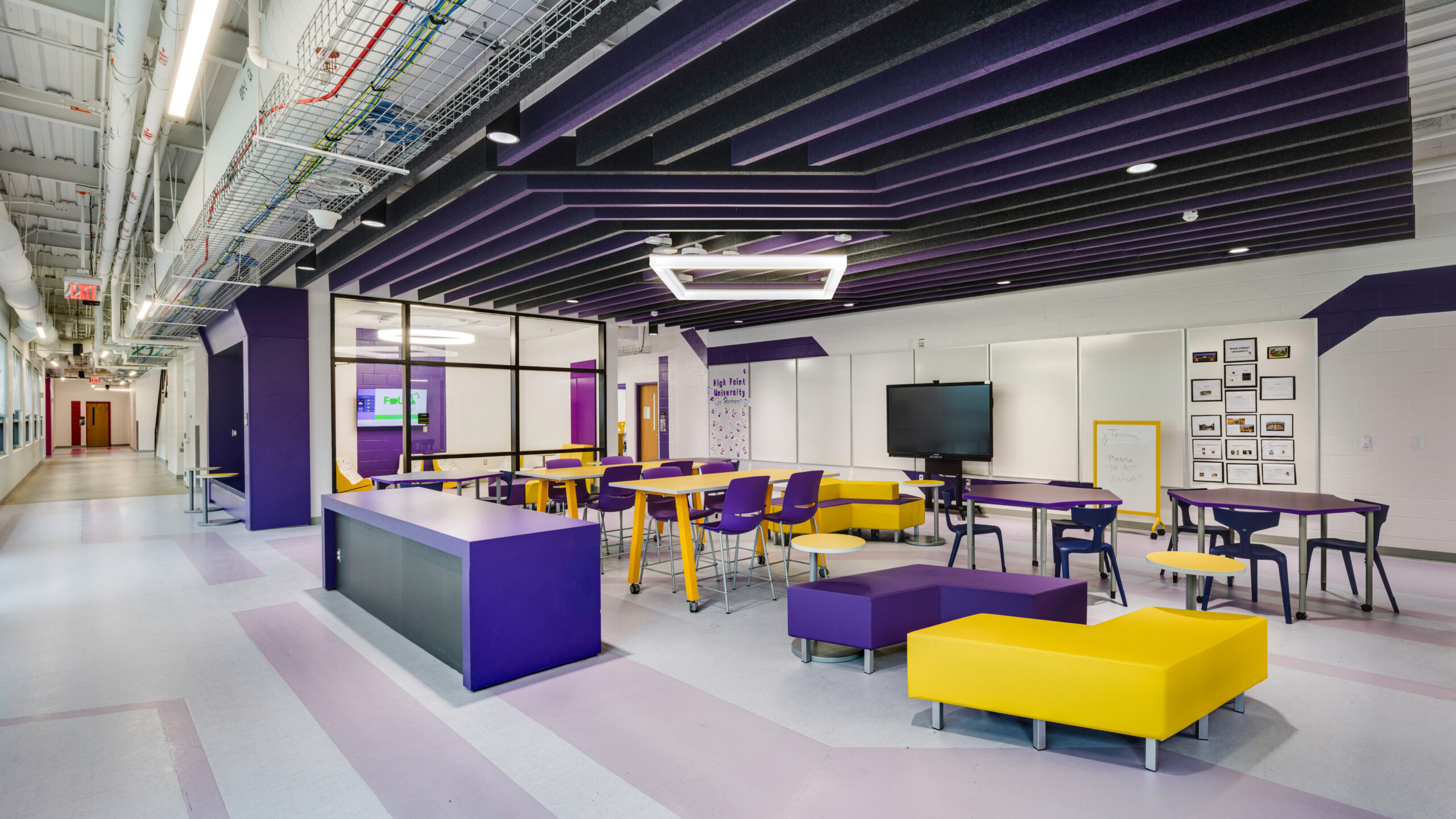
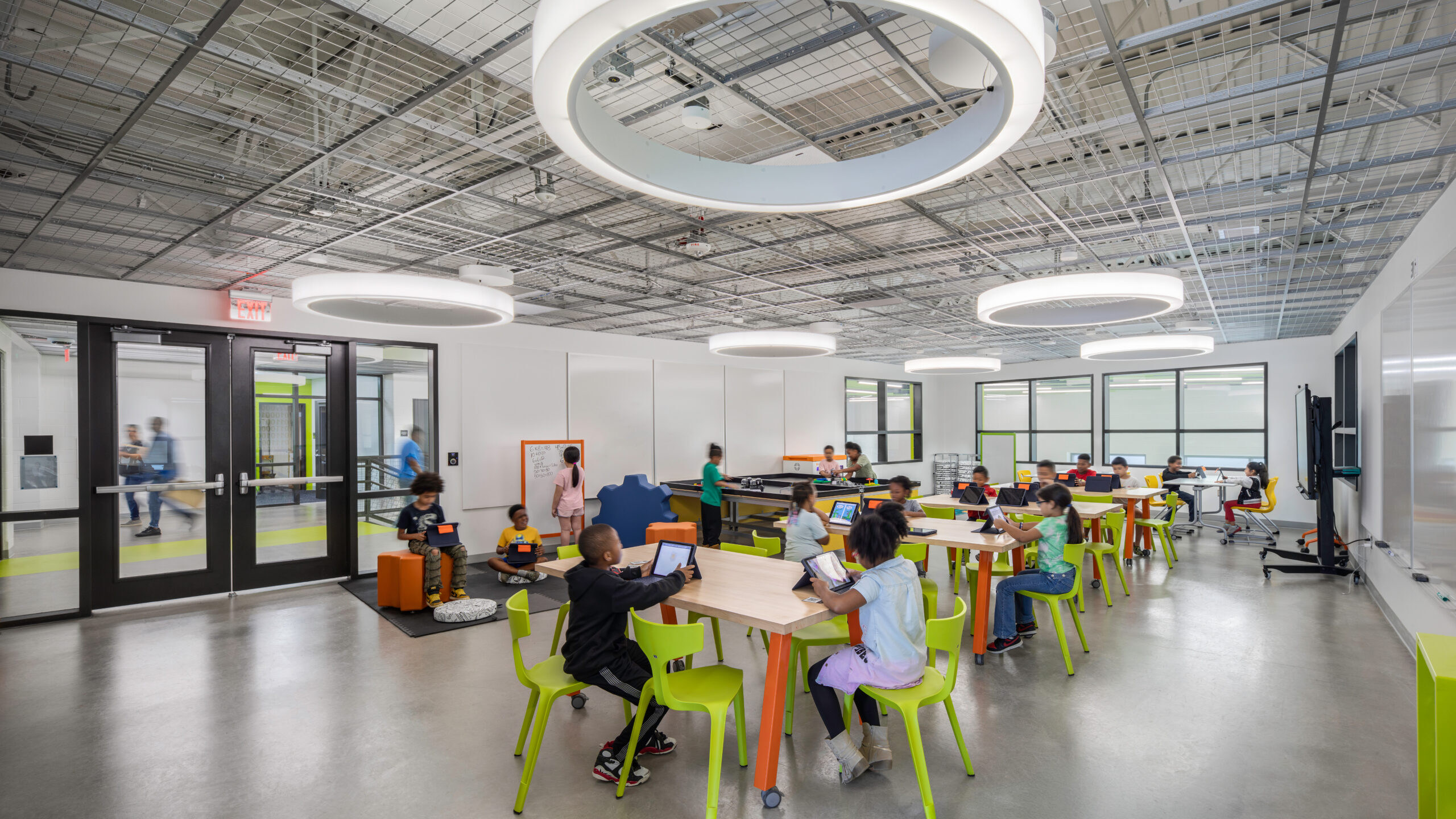
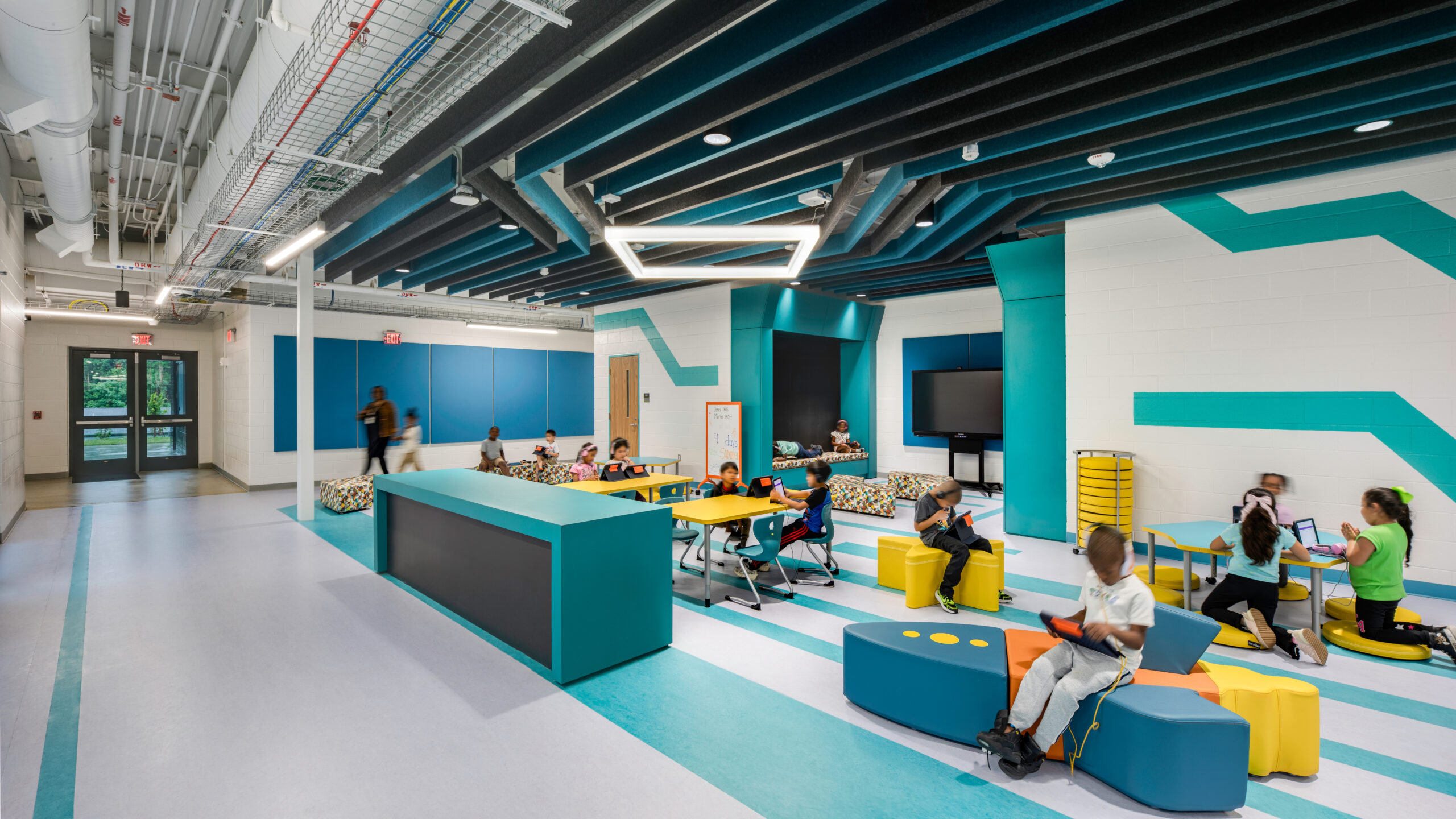
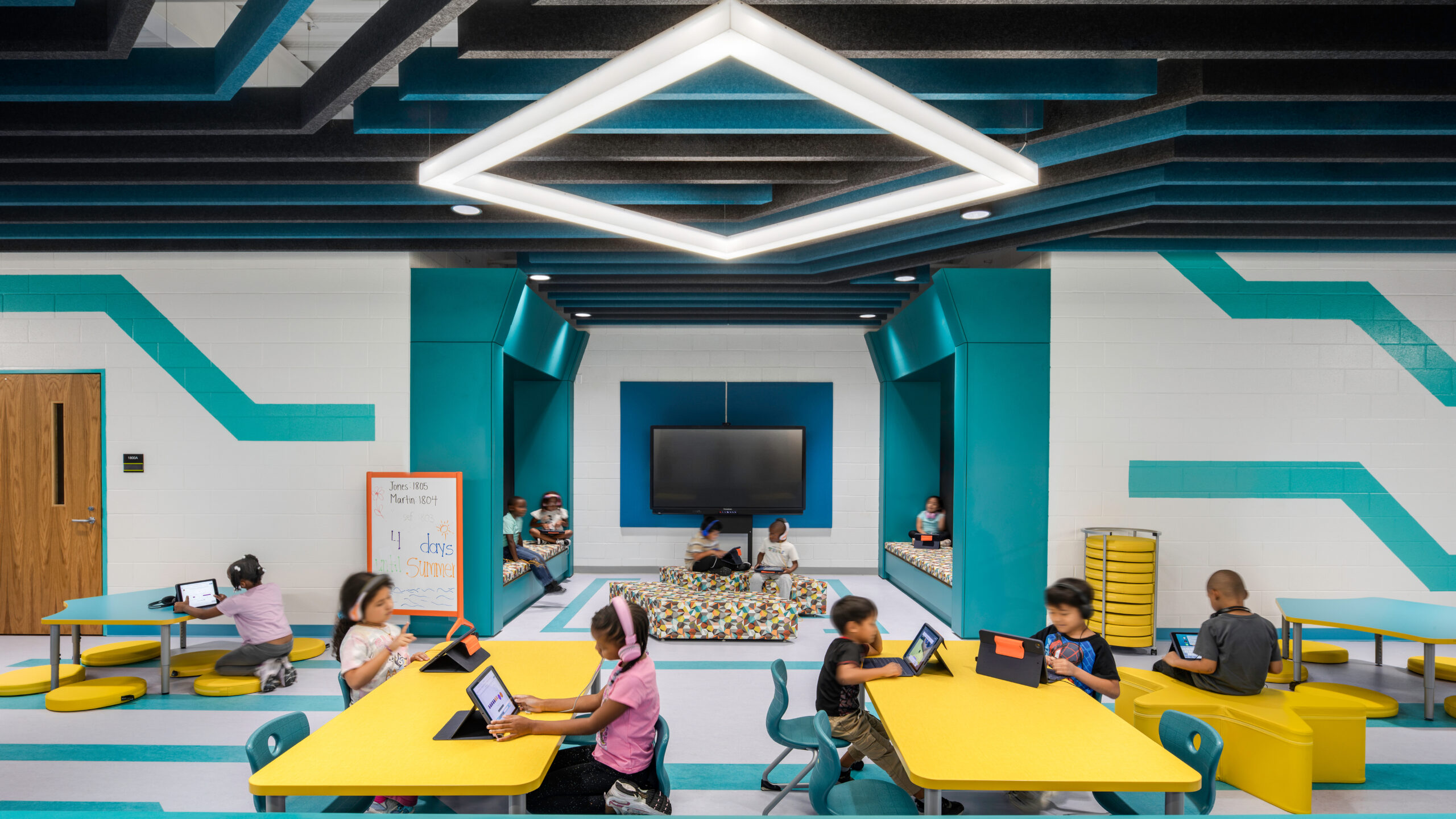
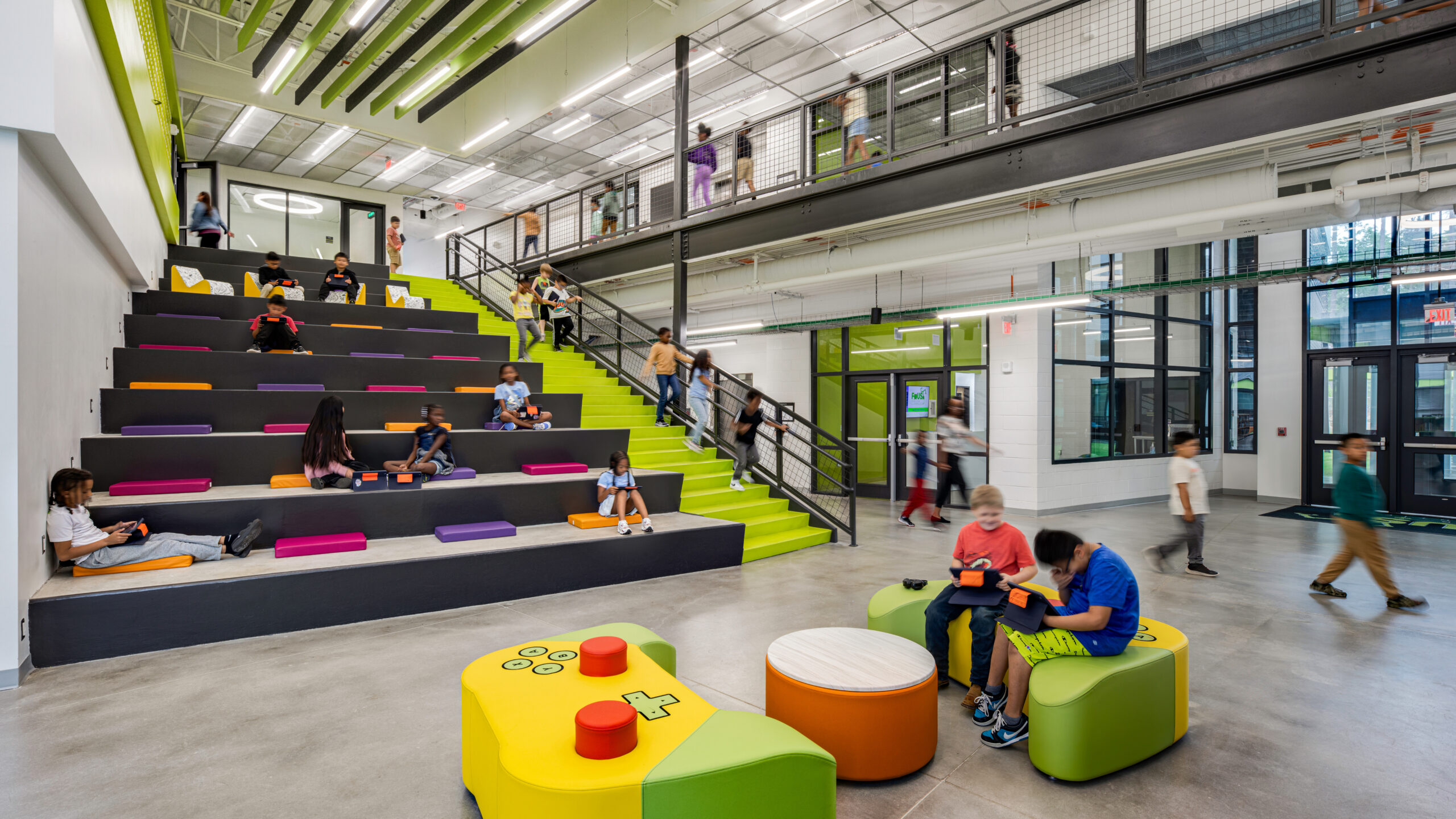
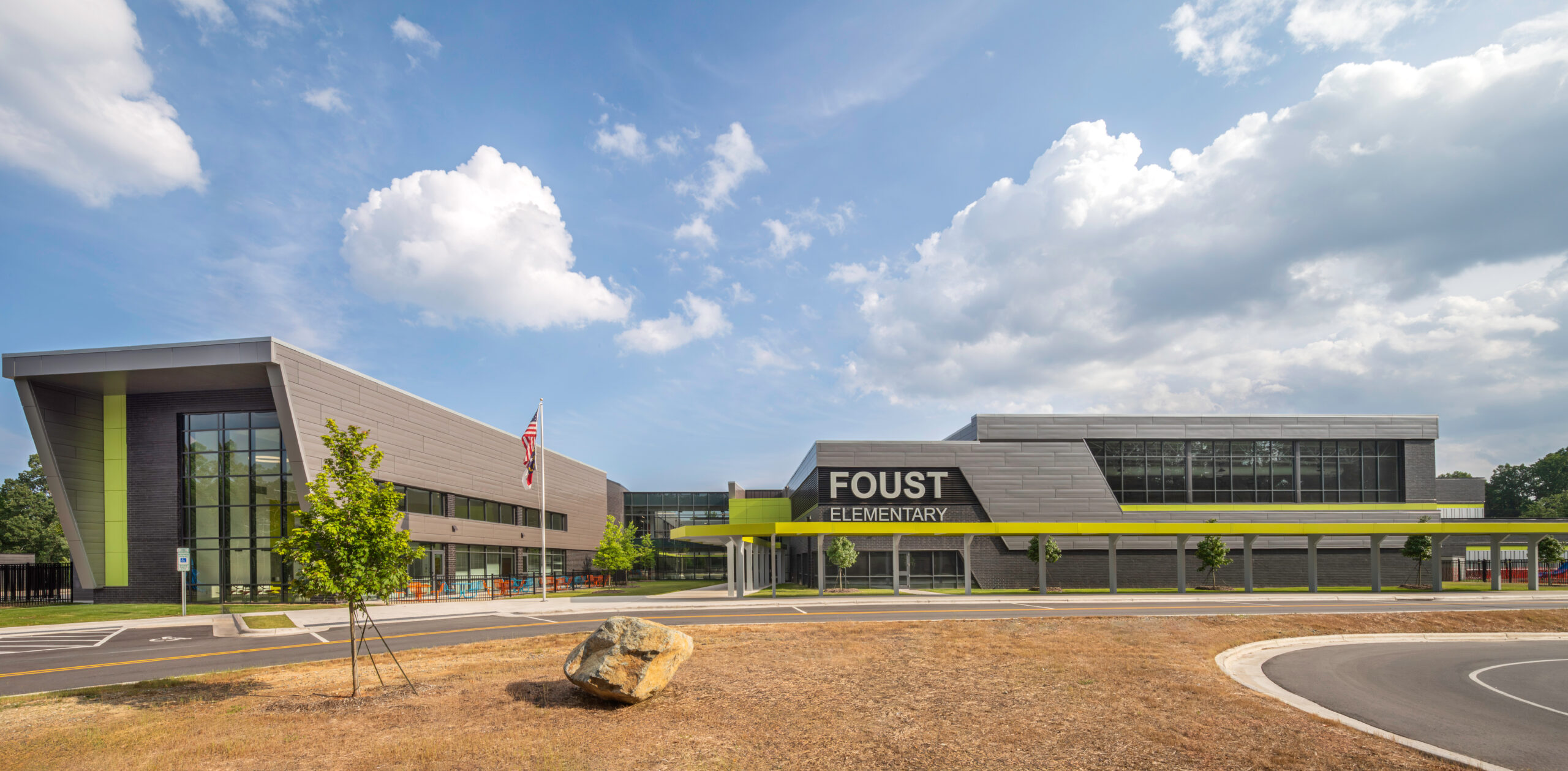
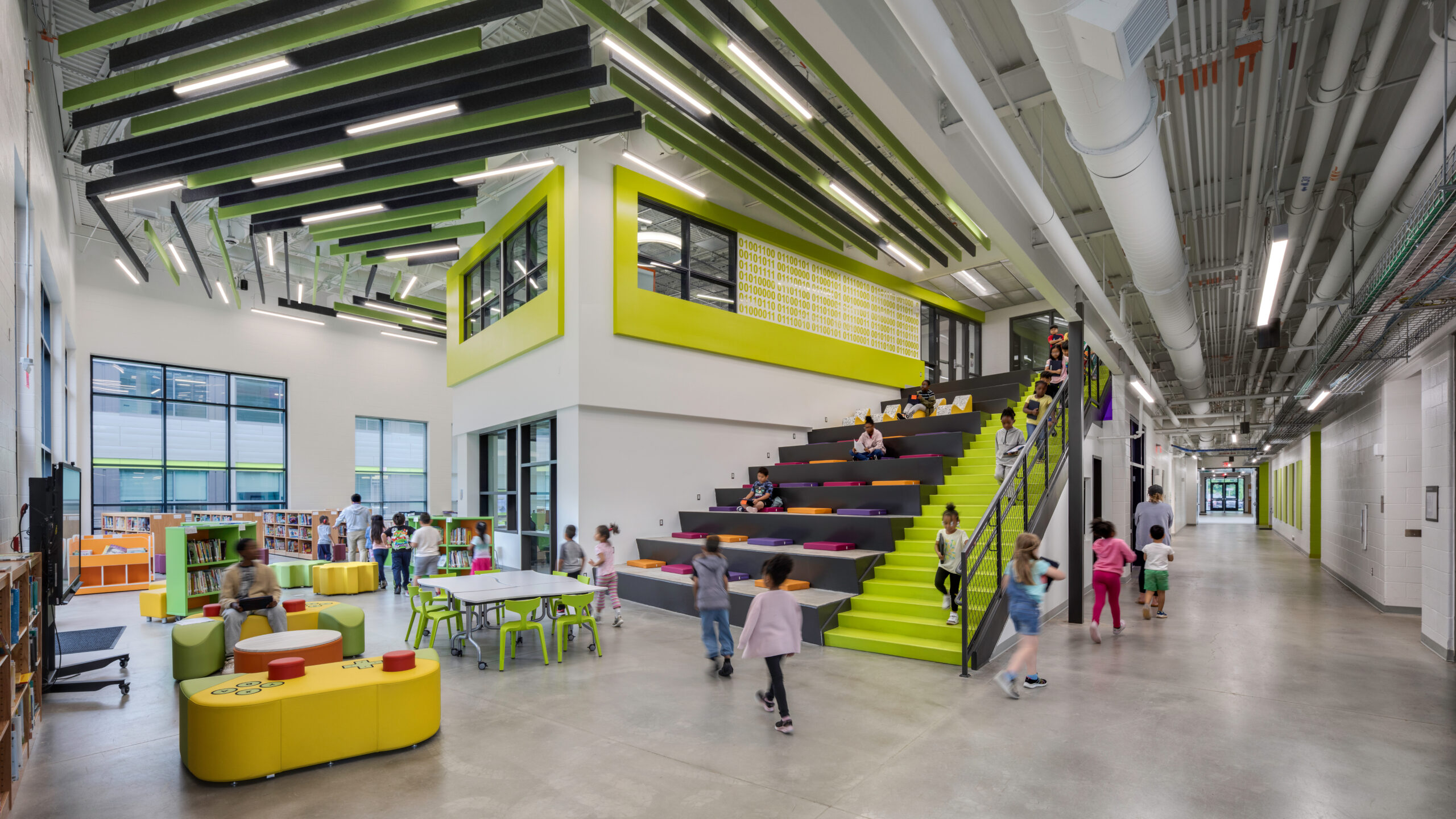
Foust Elementary Gaming & Robotics Magnet School in Greensboro, North Carolina is the nation’s first public elementary school designed with technology integrated into every aspect of learning. The transformative 90,000-square-foot school pioneers a new approach to early childhood education design and curriculum.
Foust Elementary — named for Julius Isaac Foust, the former chancellor of nearby University of North Carolina at Greensboro and a lifelong education advocate — was first constructed in the 1940s and is situated in one of the most financially challenged areas in Guilford County. Relying on routine maintenance and upkeep over the years, the school required a significant renovation and design intervention to meet today’s standards for K-12 educational facilities. Yet despite the building’s subpar conditions, the school maintains a history of high attendance and is a source of pride within the local community. To increase retention and improve student performance, client Guilford County Schools (GCS) proposed a revolutionary bond measure to finance the redesign of the building. Passed with unanimous approval by county commissioners, GCS partnered with the architect to create a modern, innovative, and inviting magnet school that could support a new framework of education and learning.
The gaming and robotics industries have made huge leaps over the last 20 years, introducing more rigorous and cutting-edge career opportunities than ever thought possible. And with Foust minutes away from the UNC-Greensboro campus, the GCS leadership envisioned the school would forge a physical connection between early childhood education and college and career preparedness, marking Foust as the starting point for continuing education in the county. As current and incoming students are digital natives, the school applies an academic rigor and formatted structure to support their proficiency and technical acumen.
Together, GCS and the architect hosted a series of public meetings and subject-matter-expert meetings for community input. The architect also sourced feedback from their Fortune 500 technology clients to collect insights that informed both the building’s design and the school’s curriculum. GCS and the architect were inspired by Futures First Gaming, an extracurricular program that teaches elementary school-aged children how to code, develop their own video games, operate drones, and more, to create coursework. Understanding the school’s new focus would be on gaming and robotics, the district made the decision to integrate magnet program, encouraging interested students and families to apply to attend.
The challenge for GCS and the architect came in incorporating the technical and technological programming within the standard district curriculum. The architect experimented with different concepts and arrangements to find the right adjacencies for the two-story building, developing graphs and diagrams that outlined the traffic flow and anticipated circulation of a student or teacher on a typical day.